Galápagos Galápagos
Credo che la costante di queste mie pagine di viaggio sia che sono scritte al 90% sui mezzi pubblici, la mia piazza di paese preferita. In questo caso sono le valli andine vicino a Quito che mi scorrono di fianco e mi danno la giusta ispirazione.
Con il marsupio nascosto sotto la maglietta, lo zainetto in braccio e la mochila grande di fianco a me perché “aquí hay robos, no la pongas arriba ni tampoco abajo del asiento..”, facciamo un po’ di ordine sulle ultime settimane in Ecuador..
L’Ecuador è (forse) l’ultima tappa del mio viaggio, se vogliamo mantenere la narrazione degli stati nazionali come unica entità geografica. Ma è anche la prima tappa in Sudamerica, dopo tanti mesi tra barche a vela, Caraibi e Centroamérica.
Prima fermata: Guayaquil. La più grande città Ecuatoriana, e anche quella con la peggior fama. Ovviamente non potevo desistere dal darci una breve occhiata, anche perché è uno scalo obbligato per le Galápagos… e poi le città portuali hanno sempre un certo fascino su di me.
Sarà la mia anfitriona, Maria, a darmi il benvenuto innanzitutto con un bacio sulla guancia (shock, troppo tempo passato in luoghi dove non è consuetudine tra sconosciuti) e a darmi le prime dritte su dove - e specialmente non - andare.
Come spesso, ma non sempre, la nomea che precede una zona malfamata è peggiore di quello che è realmente. Tuttavia le mie 36 ore di esplorazione di Guayaquil si limiteranno alle ore diurne e zone trafficate, just in case ;)
Qualche giorno più tardi, sarà il TG che guardo ogni sera al mio comedor di fiducia a Puerto Ayora (Galapagos) ad avvisarmi dell’arresto di Fito, il più importante narco ecuatoriano, non troppo lontano da Guayaquil.
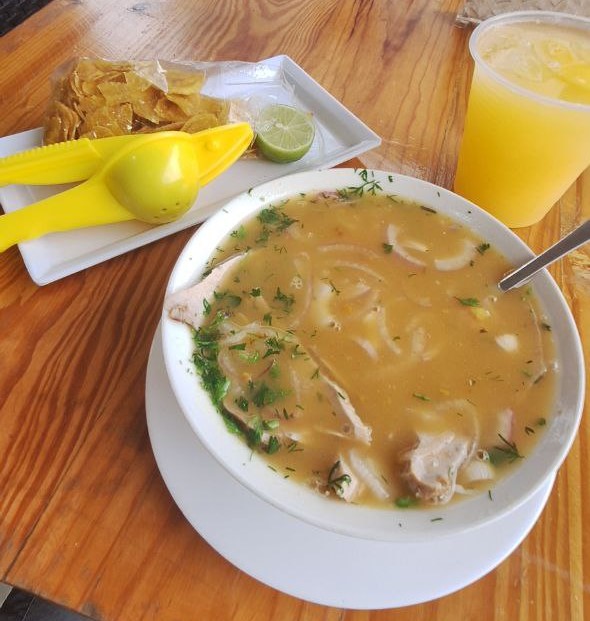
Cooomunque la comida (cibo) Ecuatoriana è molto varia e una benedizione dopo la monotonia riso-fagioli-insalata-proteina del Centroamerica (sto generalizzando sì). Forse I 2.5$ - sì qua la valuta è il dollaro statunitense - di un 2-course meal con succo aiutano a farmela amare. Subito amore a prima vista con la colazione principale nelle prossime settimane: encebollado, nuova zuppa preferita. Un elisir di pesce, yucca, cipolla marinata e coriandolo. Con chifle (chips di platano) la colazione degli dei. Anche perfetto per cuando tienes chuchaqui (postumi).
L’esplorazione di Guayaquil procede senza intoppi. Dopo 3 mesi a inseguire le velocissime e timidissime iguane verdi in Centroamérica, me le trovo semiaddomesticate qua in un parco a prendere il sole mentre i bambini giocano a palla.
Menzione speciale per il chico che mi fa la nuova sim. Guarda il mio passaporto “Ah sei di Savigliano.. 50km da Torino vero?” E io tipo “o.O Quee?” ebbene sì era stato nella mia città natale. Mondo piccolo.
Il tempo di due colazioni encebollade e già è ora del mio volo solo andata per le Galapagos!
Il mio bambino interiore freme (e il mio adulto esteriore pure): le Galápagos !!! La megafauna, il viaggio di Darwin, la vita marina, la teoria dell’evoluzione.
E ci sto andando con una licenza di advanced scuba diving e nessuna paura di usarla.. come faccio a non essere gasato?
—
Flashforward: sono passate tre settimane e sto per dire addio (arrivederci?) alle Galápagos.
Tre settimane filate rapidissime.
Ora potrei dire ‘difficile riassumere tutto ciò che è successo in questi giorni’ e invece no, perché non è successo molto. E allora come hanno fatto a passare così in fretta?
Il 99% del territorio dell’arcipelago è riserva naturale protetta.
Ciò vuol dire che l’esplorazione fai-da-te è limitatissima a una manciata di sentieri. Per visitare qualsiasi altra cosa, bisogna pagare un tour o una guida - a prezzi pazzerelli.
Ho visitato tre su quattro delle isole abitate, e tutte hanno una cosa in comune: i leoni marini e le iguane. Sono ovunque, ed entrambi dormono sempre. I leoni marini sono i re degli stupidoni specialmente quando si sdraiano sulle panchine e non fanno sedere nessun altro; i grossi maschi fanno meno ridere quando ti noiosano bloccando il passaggio per entrare in acqua. Le iguane nere fanno spesso dei pigiama party al bordo delle strade, dei mini-godzilla che dormono una sopra l’altra. Sono le uniche iguane marine del mondo, ed espellono il sale in eccesso starnutendotelo in faccia se ti avvicini troppo.
I pochi punti di accesso per fare snorkeling non deludono. Pur essendo all’equatore, l’acqua è sorprendentemente fredda. Ma il mare fa sempre qualche regalo: una tartaruga pigra che bruca, un leone marino giocoso che ti nuota intorno o uno squaletto bastardo che ti arriva alle spalle mentre stai facendo apnea sul fondale a 10 metri.
Comunque il mio motivo principale per venire qua era uno: immersioni. Il top del top sono le remote ‘isole’ (scogli grandi) Wolf e l’arco di Darwin. Grandi speci pelagiche (squali balena, mola mola, manta etc) e migliaia - non esagero - di squali, con martello o senza. L’unico modo di raggiungerle è con un liveabord di una settimana a qualche migliaio di euro. Ci ho veramente pensato? Certo. Ma alla fine ho optato per spedizioni di un giorno intorno alle isole principali. Me ne sono pentito? No. Il mio portafoglio ha gradito? Sicuramente.
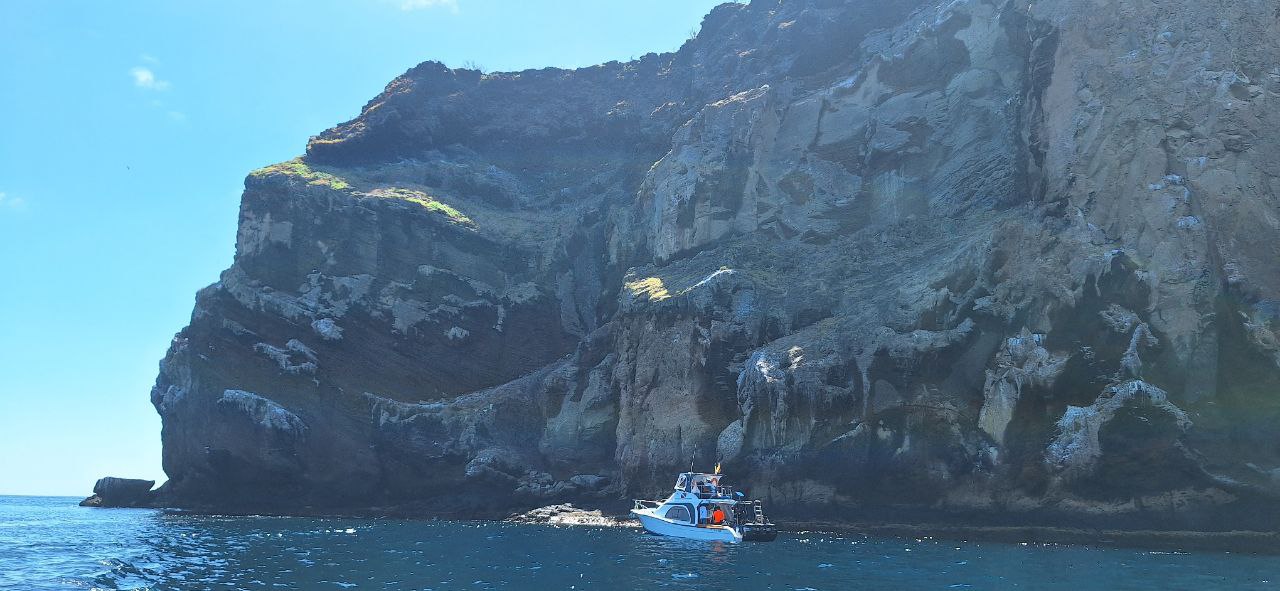
E così ho visitato molte delle isole disabitate. Alcune poco più che dei grandi scogli, altre grandi ex-crateri collassati. Tutte sono ricoperte dalla merda delle tantissime specie di uccelli che vivono qua. Non ci ho mai messo piede sopra, ma le ho osservate bene da sotto la superficie del mare. Queste giovani isole vulcaniche entrano in acqua in diversi modi, a volte con pareti verticali o strutture di lava, altre volte più gradualmente.
Spesso durante le immersioni non sai mai se concentrarti sul micro o sul macro, la vita minuscola tra le rocce o i silenziosi giganti che vanno e vengono senza fare rumore. Non avendo gli occhi dietro la testa, non puoi fare entrambe le cose.
Ma qua alle Galápagos nessun dubbio: occhi sempre puntati sul grande blu.
Potrei scrivere per ore di ciò che ho visto sott’acqua - non lo farò, ho già compilato il mio Pokédex apposta. Dirò solo qualcosina.
Centinaia di squali, tartarughe, razze, tonni, pesci angelo. L’acqua a volte talmente fredda che vedi il termoclino sotto di te e sai che dovrai pisciare nella wetsuit (sorry) per arrivare a fine dive senza tremare. Le correnti. Il momento post-immersione in cui ti confronti con i tuoi compagni e a volte ti rendi conto che una manta ti è passata dietro e non te ne sei accorto. E quella sensazione bellissima a inizio dive quando svuoti il gilet dall’aria, scendi, inizi a respirare sott’acqua e non sai che cosa troverai - o in questo caso, che cosa troverà te.
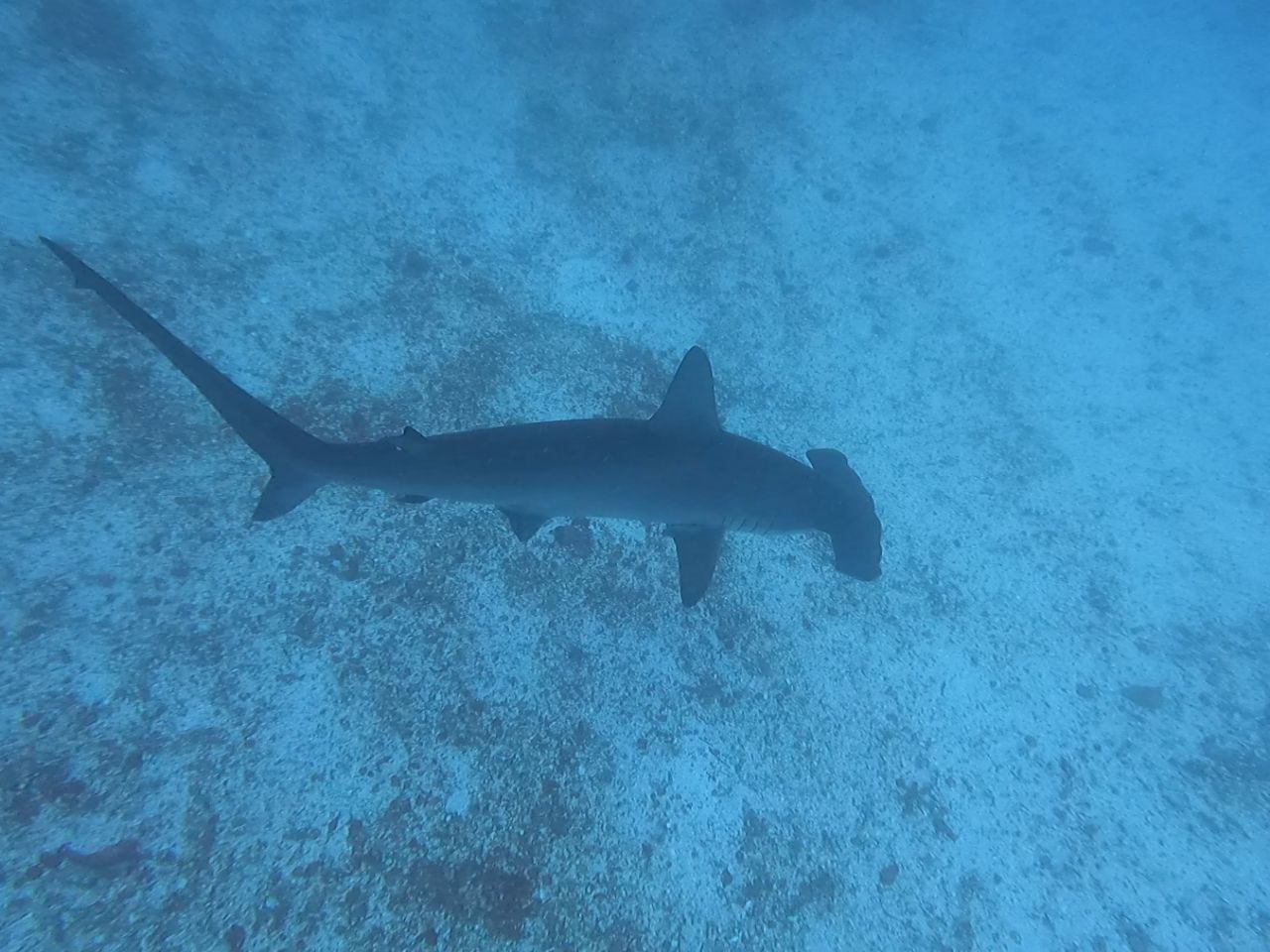
Gli squali martello sono stati la costante di quasi tutte le immersioni. E sono convinto che tutti quei muscoli e denti siano una copertura per quanto sono timidi e paurosi. Troppo spesso qualche diver con basso QI - o alto livello di gaso - li insegue per avvicinarsi, facendoli scappare. Ma come in amore, vince chi fugge: basta aspettare e loro si avvicinano, per scrutare furtivamente le strane creature con la tutina e senza branchie.
Ma è un’immersione senza squali che si guadagna il primo gradino del podio. Daphne Minor è un grande blocco di roccia popolato da leoni marini e boobies dai piedi blu (uccelli). Da qui si vede bene sua sorella, Daphne Major. È una piccola isola a forma di cono, un vulcano spento dall’aspetto desolato. Per me è molto emozionante vederla. Negli anni 70, i coniugi Grant e i loro assistenti la scelsero come meta di campeggio per diversi mesi l’anno, stabilendosi sull’unica zona piatta: l’anello del cratere. Gli piacque così tanto che ci tornarono per diversi decenni. Il motivo? Tracciare individuo per individuo la popolazione endemica di Darwin finch (alcune specie di passeri), per decine di generazioni. Svitati? Forse. Ma questo esperimento fu la prima prova concreta della teoria dell’evoluzione tramite selezione naturale. Teoria nata dalle straordinarie intuizioni che Darwin ebbe proprio qui alle Galápagos. E così chiusero il cerchio.
Fine momento Piero Angela (A me queste cose gasano, cosa ci devo fare?).
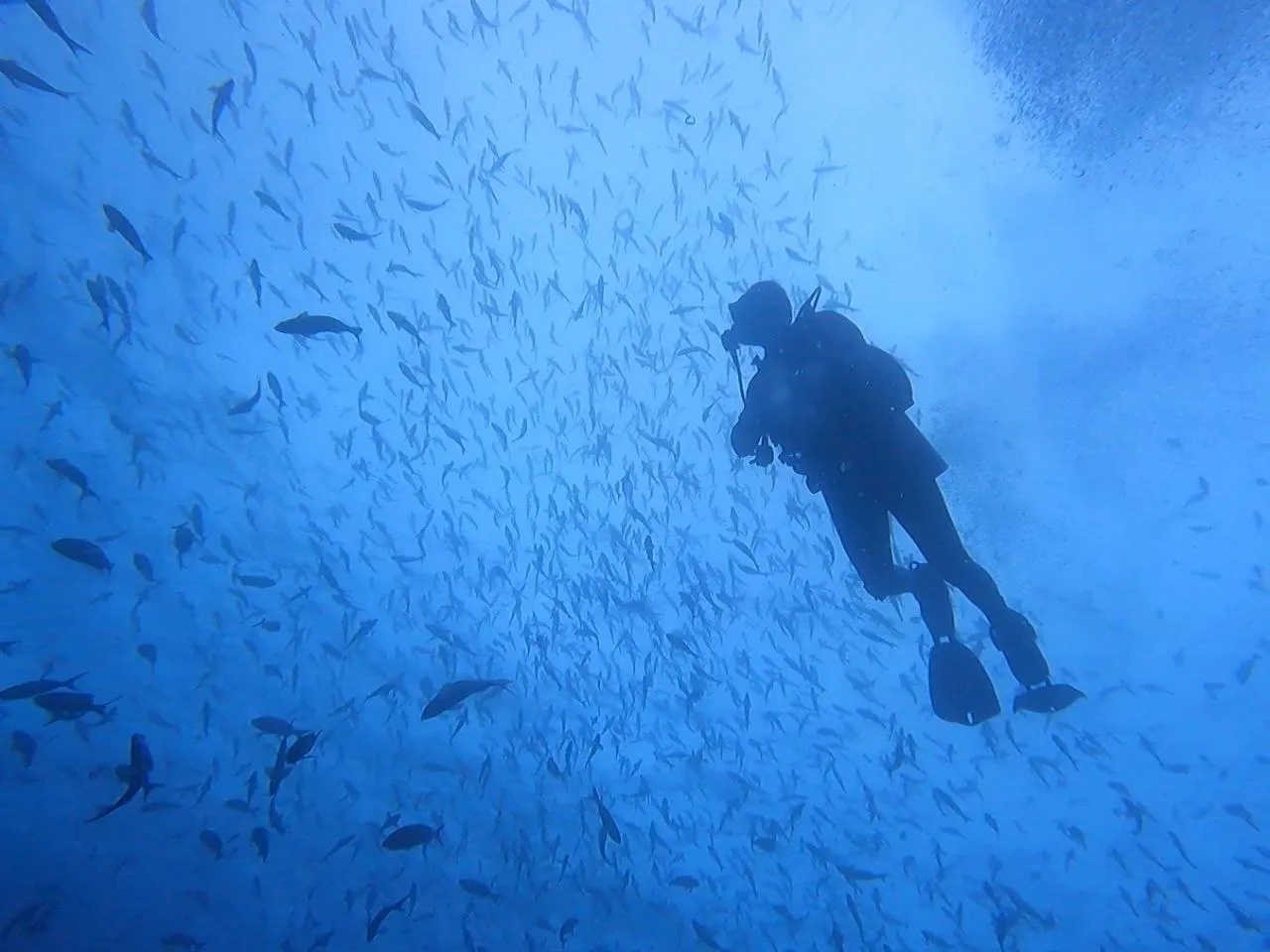
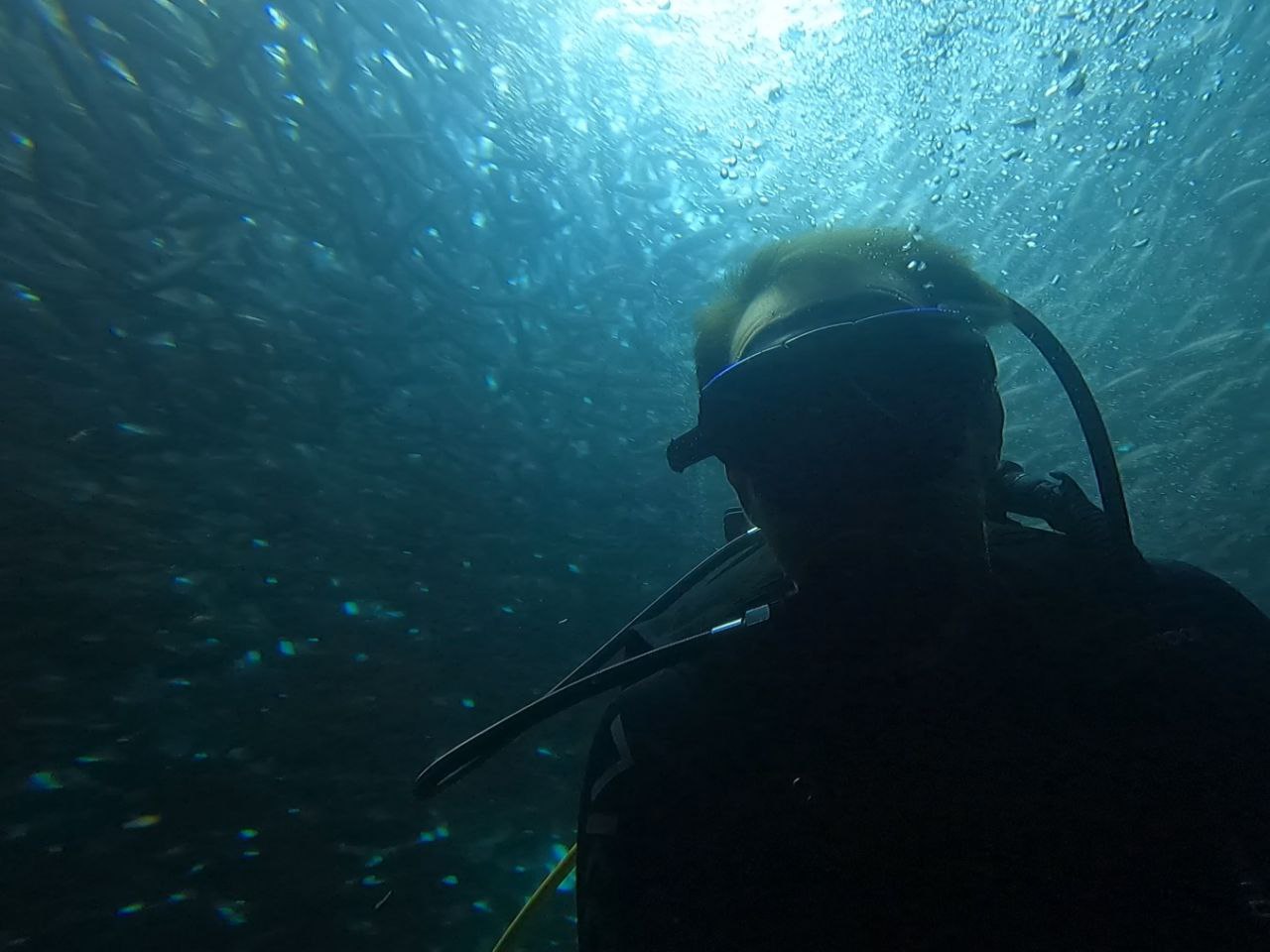
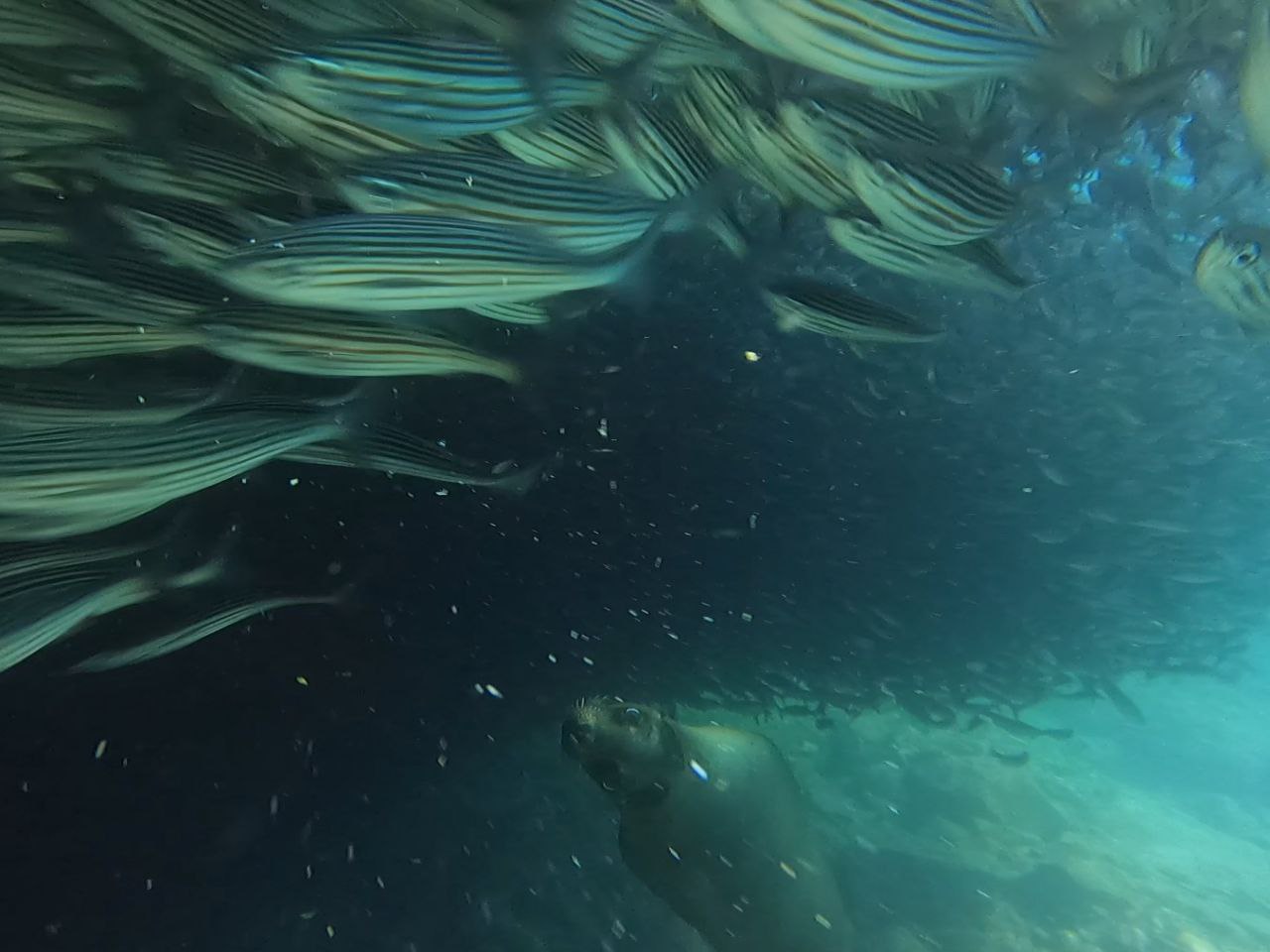
Mentre ci avviciniamo a Daphne Minor, vedo una grande macchia scura nell’acqua. Sicuramente il più grande animale che abbia mai visto - più delle megattere. “Que son?” “Son salemas”. Io: “Salemas??”. Le salemas sono salpe, dei pesci di medie-piccole dimensioni. Queste formano un enorme banco fittissimo - una baitball - per scoraggiare i predatori. Io ovviamente spero di ritrovarla sott’acqua. E quando durante l’immersione vedo il muro di salemas mi ci lancio subito dentro. Loro mi fanno subito capire che la baitball non è per fare scena. Si aprono e mi inglobano, facendomi perdere il contatto visivo con i miei compagni. Mi circondano a 360 gradi, salemas ovunque, perdo l’orientamento spaziale, sono talmente tante che in alcuni punti bloccano la luce e diventa buio pesto. Solo le mie bolle che salgono mi fanno capire la differenza tra sopra e sotto.
Ogni tanto un leone marino o uno squalo pinna bianca entra nella baitball e quasi ci scontriamo, ma loro mi evitano sempre all’ultimo. Un paio di volte qualcosa esplode nell’acqua, lo sento attraverso corpo, e tutta la baitball vibra. Scoprirò più tardi che i pazzi terroristi sono i boobies dai piedi blu. Quando si tuffano ai 100 all’ora - letteralmente - per pescare, creano un’onda d’urto per stordire i pesci.
Tutto bellissimo. Eppure le Galápagos non sono riuscite a darmi la stessa sensazione elettrizzante delle foreste centroaméricane. Molte specie qui sono endemiche e uniche al mondo. Ma sono isole “giovani”, e non hanno avuto ancora il tempo di sviluppare la stessa biodiversità delle foreste tropicali. Quando cammino nelle foreste, percepisco l’ostilità dell’ambiente. Non so mai dove mettere le mani o i piedi e ho spesso la sensazione di essere osservato. E sì mi piace.. sono strano.
Alle Galápagos ti può al massimo capitare di sentire dei muggiti ritmati, e trovare due tartarughe grandi come lavatrici che si ingroppano tra le mangrovie.
Anche il gusto dell’esplorazione viene un po’ a mancare. La maggior parte del territorio è off-limits, e accessibile solo con tour guidati.
Ma le Galápagos non hanno serpenti velenosi, giaguari, scorpioni o piante urticanti che tengono lontane le persone. Devono essere protette, e questo è il modo migliore per farlo.
Eppure neanche i costosi tour e i 220$ di tassa di ingresso riescono a frenare il turismo di massa. Le Galápagos erano disabitate prima che venissero usate come base da pirati, balenieri, colonie penali e militari.
Negli ultimi decenni l’impennata del turismo ha portato molti ecuatoriani (e non) a stabilirsi qui, attratti dalle opportunità economiche. La popolazione aumenta, e ogni anno i piccoli paesi si allargano, consumando pian piano la loro stessa fonte di sostentamento.
I pirati estinsero alcune specie di tartarughe giganti stivandone a decine vive sulle navi, per avere carne fresca durante il viaggio. Io non le ho viste in nessun menu, quindi qualche miglioramento c’è stato. Ma tanti turisti = rischio maggiore di introdurre pericolose specie invasive.
Come sarà il futuro di queste isole? Qual è il nostro ruolo, oggi, come turisti in un posto del genere? Lasciamo questi interrogativi aperti, per oggi.
Mai come prima in questo viaggio sono stato obbligato ad affrontare il mio essere un ‘turista’. Qui le scappatoie per entrare nell’acerba cultura locale sono ridotte all’osso. Me la sono vissuta come una specie di vacanza, dentro il viaggio - il privilegio di avere la possibilità di scrivere queste parole mi disarma.
Mentre io faccio il turista alle Galápagos, Emma è tornata in Europa. Vivere il ritorno attraverso i suoi occhi mi attiva qualcosa.
E inizio a pensare, cosa mi aspetto dal mio ritorno?
È impossibile tornare da un viaggio senza portare a casa qualcosa. A volte è un magnete per il frigo o il ricordo di una serata epica. Altre volte è una lista di luoghi, cibi nuovi o persone conosciute. Ma io lo so che questo non mi basta.
Ormai mancano due mesi e anche il mio viaggio finirà. So già che passeranno in un battito di ciglia. E che cosa metterò nella valigia, che cosa porterò a casa? Non avere una precisa idea di casa (Bruxelles, Italia, me stesso?) rende questa domanda più difficile. Ma non me ne preoccupo troppo: a volte la risposta e già nella domanda.
I believe the one constant in these travel pages of mine is that 90% of them are written on public transport, my favourite kind of town square. In this case, it’s the Andean valleys near Quito flowing past me, giving me just the right inspiration.
With my waist bag hidden under my t-shirt, my small backpack in my arms, and the big mochila next to me because “aquí hay robos, no la pongas arriba ni tampoco abajo del asiento…”, let’s do a little recap of the past weeks in Ecuador…
Ecuador is (perhaps) the last stop of my journey, if we want to maintain the narrative of nation-states as the only geographic unit. But it’s also the first stop in South America, after so many months between sailboats, the Caribbean, and Central America.
First stop: Guayaquil. The largest Ecuadorian city, and also the one with the worst reputation. Obviously I couldn’t resist taking a brief look, especially since it’s a mandatory stop on the way to the Galápagos… and port cities always hold a certain charm for me.
My host, Maria, welcomed me with a kiss on the cheek (shock—too much time spent in places where that’s not customary with strangers), and then she gave me first tips on where—and especially where not—to go.
As often, but not always, the reputation preceding a shady area is worse than reality. However, my 36 hours exploring Guayaquil were limited to daytime and busy areas, just in case ;)
A few days later, it was the news I watch every evening at my go-to comedor in Puerto Ayora (Galapagos) that informed me about the arrest of Fito, Ecuador’s most important narco, not too far from Guayaquil.
Aaaanyway, Ecuadorian comida is very varied and a blessing after the rice-beans-salad-protein monotony of Central America (yes, I’m generalizing). Perhaps the $2.5 — yes, here the currency is the US dollar — for a two-course meal with juice helps me love it.
Love at first sight with the main breakfast for the coming weeks: encebollado, my new favorite soup. An elixir of fish, yuca, marinated onion, and cilantro. With chifle (plantain chips)—the breakfast of the gods. Also perfect for when you have chuchaqui (hangover).
Exploring Guayaquil went smoothly. After three months chasing the fast and shy green iguanas in Central America, I found them here semi-domesticated in a park, basking in the sun while children played ball.
Special mention for the guy who got me a new SIM card. He looks at my passport: “Ah, you’re from Savigliano… 50 km from Turin, right?” And I’m like “o.O Quee?” — yes, he’d been to my hometown. Small world.
It took the time of two encebollado breakfasts and it was already time for my one-way flight to the Galapagos!
My inner child is going crazy (and my outward adult too): the Galápagos!!! The megafauna, Darwin’s voyage, marine life, the theory of evolution.
And I’m going there with an advanced scuba diving license and no fear of using it… how could I not be excited?
—
Flashforward: three weeks have passed and I’m about to say goodbye (or see you again?) to the Galápagos.
Three weeks that went by super fast.
Now I could say, “it’s hard to summarize everything that happened in these days,” but no… because not much really happened. So how did they pass so quickly?
99% of the archipelago’s territory is a protected natural reserve.
That means DIY exploration is extremely limited to just a handful of trails. To visit anything else, you have to pay for a tour or a guide—at crazy prices.
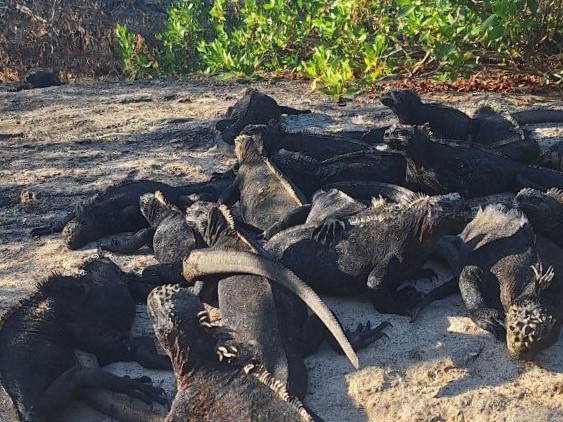
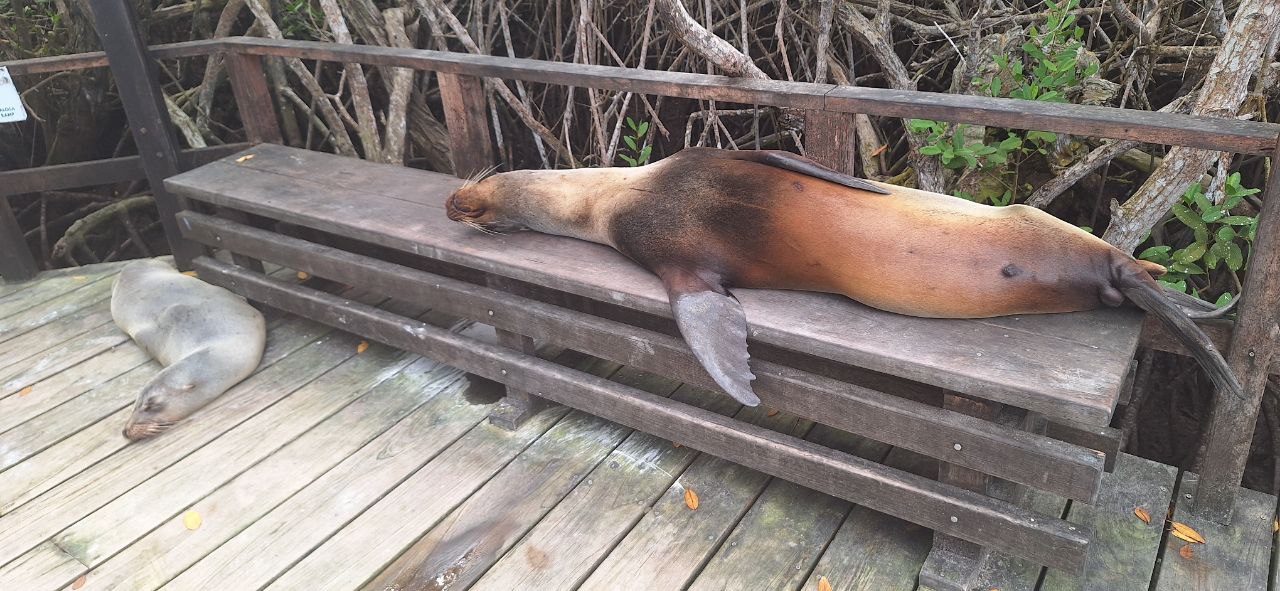
I visited three of the four inhabited islands, and they all have one thing in common: sea lions and iguanas. They’re everywhere, and both are always sleeping. The sea lions are the kings of dumbness, especially when they lie down on benches and let no one else sit; the big males are less funny when they block the way into the water. The black iguanas often have sleepovers at the roadside, mini-Godzillas sleeping on top of each other. They’re the only marine iguanas in the world, and they expel excess salt by sneezing it in your face if you get too close.
The few snorkeling access points never disappoint. Although we are on the equator, the water is surprisingly cold. But the sea always gives some treats: a lazy turtle grazing, a playful sea lion swimming around you, or a sneaky little shark that comes up behind you while you’re freediving at 10 meters depth.
My main reason for coming here was one: diving. The best of the best are the remote ‘islands’ (huge rocks) Wolf and Darwin’s Arch. Big pelagic species (whale sharks, mola mola, mantas, etc.) and thousands—not exaggerating—of sharks, with or without hammerhead. The only way to reach them is via a week-long liveaboard costing several thousand euros. Did I seriously consider it? Of course. But in the end I opted for day expeditions around the main islands. Did I regret it? No. Did my wallet appreciate it? Definitely.
And so I visited many uninhabited islands. Some just big rocks, others large collapsed craters. All are covered in the shit of the many bird species living here. I never set foot on them, but observed them well from beneath the water’s surface. These young volcanic islands drop into the water in different ways—sometimes with vertical walls or lava formations, other times more gradually.
Often during dives, you never know whether to focus on micro or macro—the tiny life among the rocks, or the silent giants passing by without a sound. Without eyes in the back of your head, you can’t do both.
But here in the Galápagos there’s no doubt: eyes always on the big blue. I could write for hours about what I saw underwater—I won’t; I’ve already filled out my Pokédex for that. I’ll mention just a bit.
Hundreds of sharks, turtles, rays, tunas, angelfish. Water so cold at times that you see the thermocline below you and know you’ll have to pee in your wetsuit (sorry) to finish the dive without shivering. The currents. The post-dive moment when you talk with your buddies and sometimes realize a manta passed behind you and you didn’t even notice. And that beautiful feeling at the start of a dive, when you empty your BCD of air, descend, start breathing underwater and have no idea what you’ll find—or in this case, what will find you.
Hammerheads were the constant in nearly all my dives. And I’m convinced all those muscles and teeth are just a cover for how shy and scared they are. Too often some diver with low IQ—or high excitement level—chases them to get close, scaring them away. But like in love, the one who flees wins: just wait and they’ll approach to stealthily scrutinize the strange creature with a suit and without gills.
But it’s a dive without sharks that wins the top podium spot. Daphne Minor is a large rock block populated by sea lions and blue-footed boobies (birds). From here you can clearly see its sister, Daphne Major: a small, cone-shaped island, an extinct volcano with a desolate look. For me it’s very exciting to see it. In the ’70s, the Grants and their assistants chose it for months-long camping stays, settling in the only flat zone: the crater’s rim. They liked it so much they returned for decades. Why? To track all the specimen of the endemic Darwin’s finch population by individual, over dozens of generations. Crazy? Maybe. But the experiment was the first concrete evidence of evolution via natural selection. A theory born from Darwin’s extraordinary insights he had right here in the Galápagos. And so they closed the circle.
Now we can wrap up this David Attenborough moment (yeah, this stuff gets me hyped, what can I say?)
As we approach Daphne Minor, I see a big dark patch in the water. Probably the largest animal I’ve ever seen—bigger than humpbacks. “Que son?” “Son salemas.” Me: “Salemas??”
Salemas are salps—a medium-small fish. They form a huge dense school—a baitball—to deter predators. Of course I hope to find it again underwater. And when, during the dive, I see the school wall, I jump right into it. They show me immediately that a baitball isn’t for show. They part, engulfing me, making me lose visual contact with my group. They surround me 360°, salemas everywhere, and I lose spatial orientation. There are so many that in some spots they block the light and it becomes pitch-black. Only my bubbles rising remind me of above and below.
Every so often, a sea lion or a white-tip shark enters the baitball and we almost collide, but they always dodge me at the last second. A few times something explodes in the water, I feel it through my body, and the whole baitball vibrates. I’ll discover later that the crazy terrorists are the blue-footed boobies: when they plunge at 100 km/h—literally—to fish, they create a shockwave that stuns the fish.
Everything is so amazing. And yet the Galápagos never gave me the same electrifying feeling as the Central American forests. Many species here are endemic and one-of-a-kind in the world. But they are “young” islands and haven’t had time to develop the same biodiversity as tropical forests. When I walk through forests, I feel the hostility of the environment. I never know where to put my hands or feet and often feel watched. And yes, I like it… I’m weird.
In the Galápagos, at most you might hear rhythmic grunts and stumble upon two tortoises the size of dishwashers making love in the mangroves.
Even the taste of exploration is somewhat missing. Most territory is off-limits, accessible only via guided tours. But the Galápagos don’t have venomous snakes, jaguars, scorpions or stinging plants that keep people away. They need to be protected, and this is the best way.
Yet even costly tours and the $220 entry tax can’t stop mass tourism. The Galápagos were uninhabited before they were used as bases by pirates, whalers, penal colonies, and militaries. In recent decades, the tourism boom has brought many Ecuadorians (and others) to settle here, drawn by economic opportunity. The population increases, and every year small towns expand, gradually consuming their own source of livelihood.
Pirates wiped out some giant tortoise species by storing dozens alive onto ships for fresh meat during their trips. I didn’t see them on any menu, so at least there’s been some improvement. But having lots of tourists means more risk of introducing dangerous invasive species.
What will the future be for these islands? What is our role today as tourists in such a place? Let’s leave these questions open—for today.
Never before on this trip have I been forced to confront my being a ‘tourist.’ Here the opportunities to enter the young local culture are almost non-existent. I experienced it as a kind of vacation within the journey—and the privilege of being able to write these words leaves me humbled.
While I play tourist in the Galápagos, Emma returned to Europe. Living the return through her eyes triggers something in me. And I start wondering: what do I expect from my return?
It’s impossible to come back from a journey without bringing something home. Sometimes it’s a fridge magnet or the memory of an epic night. Other times it’s a list of places, new foods, or people met. But I know that’s not enough for me.
Now just two months remain, and my journey too will end. I already know they’ll go by in the blink of an eye. And what will I pack, what will I bring home? Not having a clear idea of “home” (Brussels, Italy, myself?) makes this question harder. But I’m not worrying too much: sometimes the answer is already in the question.
Resta aggiornato Stay updated
Ricevi una mail a ogni nuovo racconto Get an email with every new entry
Niente spam, solo i nuovi capitoli del viaggio - promesso :) No spam, just the new chapters of the journey - I promise :)
Iscrizione completata! Riceverai una mail a ogni nuovo racconto. You're subscribed! You'll get an email with every new entry.
Qualcosa è andato storto. Riprova. Something went wrong. Please try again.